


 Yuzuru2024-04-15 17:18:36
 Yuzuru
固收官网题,请问第1和第5问请解释一下,谢谢。


回答(1)
 Simon2024-04-16 12:01:39
 Simon
Simon同学,上午好。
第一问:
负债驱动的投资 (LDI: liability-driven investing),例如:insurance company;
资产驱动的投资 (ADL: asset-driven liability),例如:Leasing company
sset-liability management (ALM):考虑资产和负债,目标是cover liability;以liability作为benchmark
ALM、LDI、ADL的区别:ALM既管理资产也管理负债;LDI是负债已知,只管理资产;ADL是资产已知,只管理负债
point 2错在They use ADLs to structure their assets in a way that matches the maturities of the liabilities.金融企业采用ADL的方法,应该是用liability去match asset (资产已知,管理负债,需要负债去匹配资产)
第5问问题请贴下哈,同学。截图是第4问的问题
- 评论(0)
- 追问(2)
- 追问
-
谢谢老师
- 追答
-
同学,上午好。
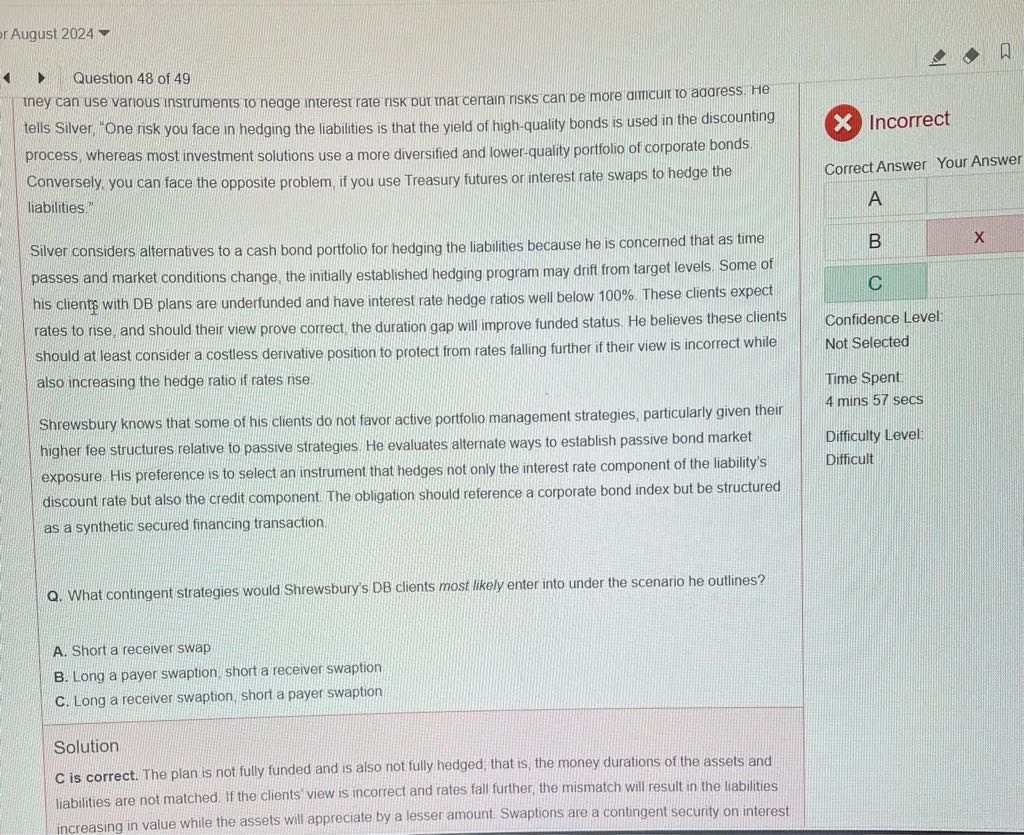
这道题有两个要求,protect from rates falling,利率下跌时提供保护;以及increasing the hedge ratio if rate rise,利率上涨时增加对冲比率。
前者,protect from rates falling,如果利率下降,债券价格上升,那么就该买入债券,增加久期,所以是long receiver swaption,进入一个收固定支浮动的权利,如果未来利率下降就行权。
后者,increasing the hedge ratio if rate rise。先看题目背景,此时养老金是underfunded的,那么就该long bond futures(增加资产,来使得资产和负债匹配,这样会使得资产的久期增加)。如果增加对冲比率,就是增加资产端duration。如果short payer swaption,利率上涨,对方支固收浮,行权,我方收固支浮,增加duration,从而增加了对冲比率。
所以要long a receiver swaption,short a payer swaption



评论
0/1000
追答
0/1000
+上传图片