


 time2022-10-07 14:31:16
 time
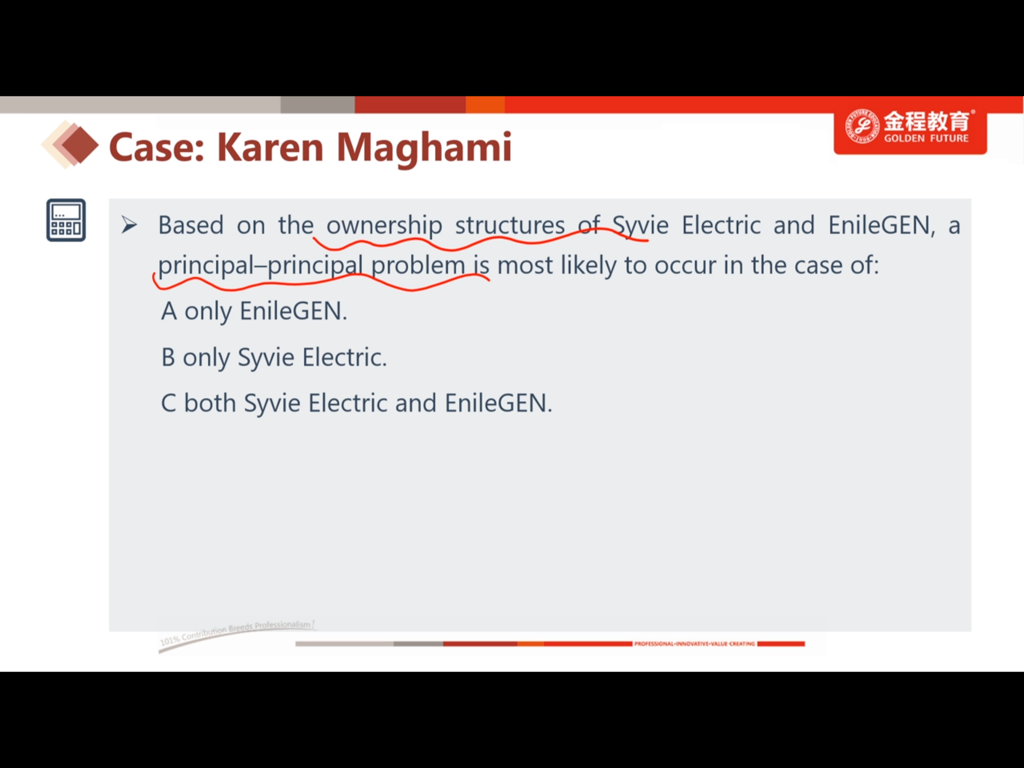
time题目什么意思
回答(1)
 Chris Lan2022-10-08 10:11:28
 Chris Lan
同学您好
根据principal–principal problem的定义:Controlling owners may also be able to allocate company resources to their own benefit at the expense of minority owners. This conflict is known as a principal–principal problem. 控股股东也可以以牺牲少数股东的利益为代价,将公司资源配置到自己的利益上。
S公司的最大股东拥有58%的股份;因此,该公司可以被描述为拥有集中的所有权和集中的投票权。集中所有权和集中投票权的结合通常与控股股东保持对经理和少数股东的权力地位有关,称为principal–principal problem。E公司最大的股东拥有9%的股份,因此该公司可归类为所有权分散的公司。E公司也有直接投票政策,即每位股东每股有一票;因此,E公司还分散了投票权。分散的所有权和分散的投票权通常与缺乏对管理者行使控制权的股东有关。因此,principal–principal problem最有可能发生在S公司,而不是E公司。
- 评论(0)
- 追问(0)


评论
0/1000
追答
0/1000
+上传图片